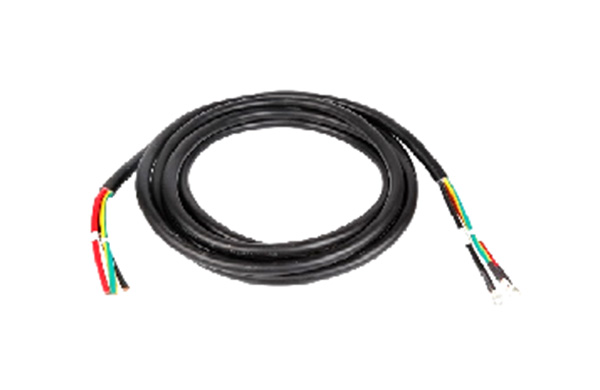



What is the difference between industrial wire harness processing and ordinary electronic wire harness
 Release time:2026-10-14
 Number of views:19


Release time:2026-10-14
Number of views:19
Industrial wire harness processing is very different from ordinary electronic wire harnesses. Industrial wiring harnesses usually have high current and extremely high requirements for wires. When an alternating current passes through a wire, the current will concentrate on the surface of the wire, increasing its resistance and power loss, which is known as the skin effect. The higher the frequency of current or voltage changes, the more significant the skin effect.
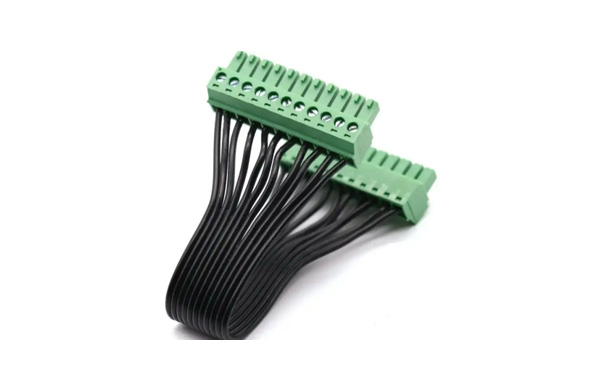
In industrial wire harness processing, skin effect is one of the most fundamental distortion processes in signal lines, and it may also be the most overlooked and misunderstood. The skin effect can cause discontinuity in the transmission of high-frequency signals due to the different components of the conductor. Similarly, on outdated wire harness conductors, the skin effect promotes the interaction and jumping of signal currents across multiple wire harnesses, causing harsh marks on sound. In order to weaken the skin effect, multiple strands of insulated thin wires are often woven into bundles in high-frequency circuits instead of thick wires with the same cross-sectional area. This type of multi strand bundle is called braided wire. By utilizing the skin effect, hollow copper wires can be used instead of new copper wires in high-frequency circuits to save copper materials. Although its resistivity may increase, it does not affect the transmission performance and can also increase the tensile strength of the transmission line.
In the application of industrial wire harness processing, the skin effect can be used to perform surface quenching on metals. In addition, the skin effect is also one of the methods of electromagnetic shielding. By using the skin effect, high-frequency electromagnetic waves can be prevented from penetrating into good conductors to create electromagnetic shielding devices, which is also the reason for poor mobile phone signals in elevators.